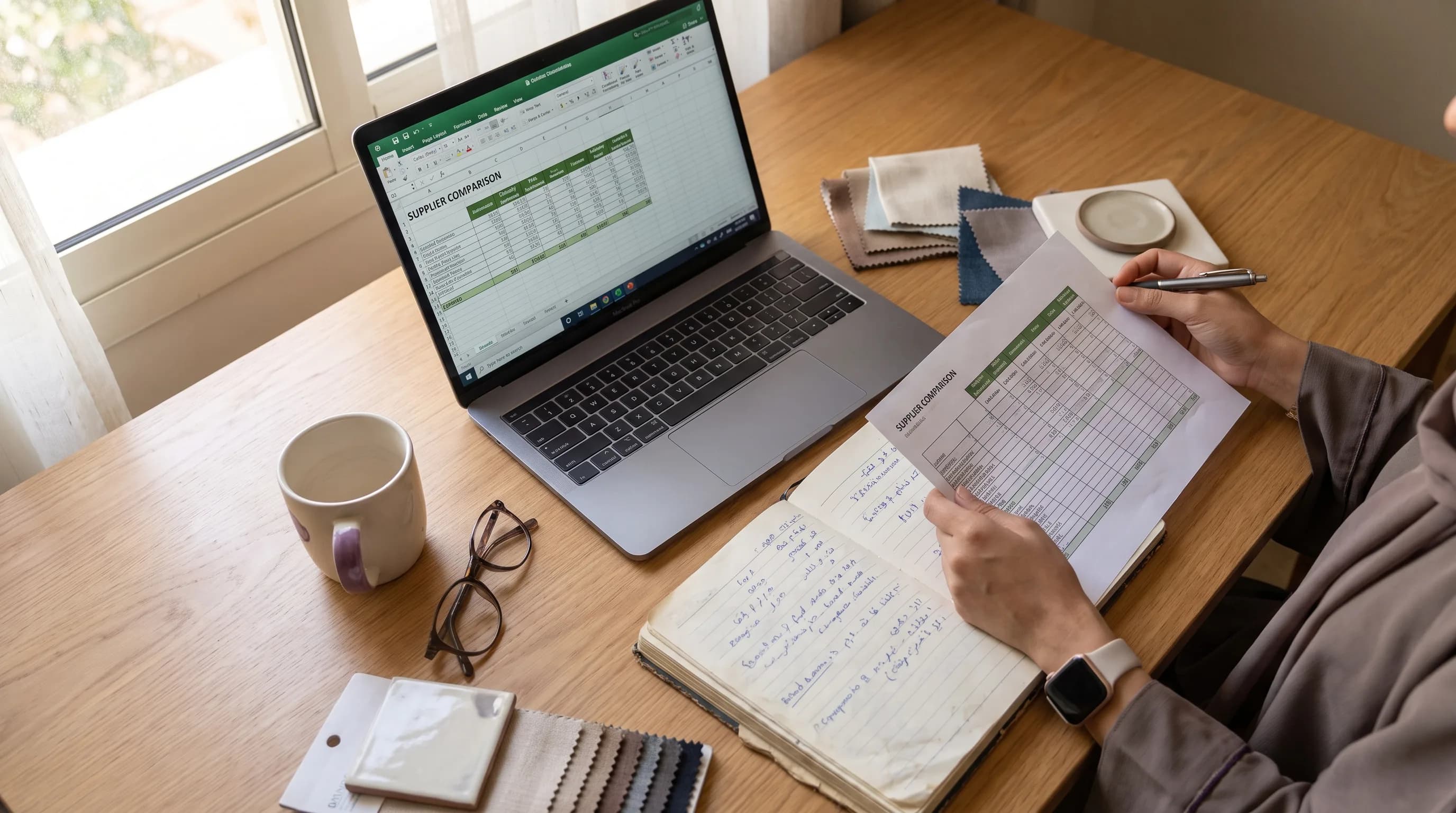
How to Create a Supplier Database People Can Trust
Making a list of links is easy. Useful sourcing research requires structure, verification, and honesty about what you do and do not know.
ProdLinc Editorial
ProdLinc Team
Published Jan 12, 2026
7 min read
Quick answer
A trustworthy supplier database uses consistent fields for every entry, states when each entry was last verified, sources its claims, and is honest about what it does not know rather than filling gaps with guesses.
A supplier database earns trust the same way any research does: by being consistent, checkable, and honest about its edges. A long list of company names with no structure or verification behind it is closer to a list of search results than something a buyer can rely on.
What a supplier database should contain
Every entry should use the same fields, in the same order, so a buyer can actually compare rows against each other instead of reading each one as a separate, differently-shaped document.
Core fields
- Company name and country
- Website and a contact method
- Product type or category
- MOQ where publicly known
- Estimated pricing notes (clearly marked as estimates, not quotes)
- Shipping options where known
- Certifications, only where publicly verifiable
- Your own category tag, for filtering
- Notes on anything relevant you found
- Last verified date
- Source of the information
How to verify information
Confirm details directly from the supplier's own website, a marketplace listing, or direct contact, rather than repeating a secondhand claim. Where you cannot verify something (a certification, an exact MOQ), either leave it blank or mark it clearly as unconfirmed. A blank field is more trustworthy than a confident-looking guess.
How often to update
Supplier pricing and terms shift often. Set a realistic re-check schedule (every few months for an actively maintained database) and show the last verified date on every entry, so a buyer can judge for themselves how current the information likely is.
How to communicate limitations
State plainly what the database is and is not: a curated starting point for outreach, not a guarantee of quality, pricing, or availability. Buyers should still do their own verification before placing a real order, and saying so directly builds more trust than staying quiet about it.
Privacy and data ethics
Only include information a company has made publicly available for business inquiries. Do not include personal contact details for individuals unless that person has clearly published them for exactly this kind of use.
Practical example
A creator building a database of packaging suppliers in one region visits each supplier's own site to confirm MOQ and product categories, notes the date checked, and marks pricing as "estimated from public listing, confirm directly" rather than presenting it as fixed. Where she could not confirm a certification claim, she leaves the field blank instead of repeating what a supplier said about itself.
Common mistakes
Action checklist
- Use the same fields, in the same order, for every entry.
- Verify each fact against a primary source before including it.
- Leave a field blank rather than guessing when you cannot confirm something.
- Show a last verified date on every entry.
- State clearly what the database does and does not guarantee.
- Exclude personal contact details not intended for this kind of public use.
FAQ
Can I include pricing if a supplier has not given me a direct quote?
Only as a clearly labeled estimate, sourced from a public listing, and only if you tell the buyer to confirm it directly before relying on it.
How many suppliers does a database need to be useful?
A smaller, well-verified list is more useful than a large, unverified one. Depth of verification matters more than raw count.
What if a supplier's details change after I publish?
That is expected. A visible last verified date and a realistic update schedule are how you handle it honestly, rather than presenting the database as permanently accurate.