How to Find Suppliers Without Getting Lost in 40 Browser Tabs
Supplier research usually starts with screenshots, WhatsApp messages and open tabs everywhere. The goal is to end with a short list worth actually contacting.
ProdLinc Editorial
ProdLinc Team
Published Jan 12, 2026
10 min read

Quick answer
Write a precise product specification first, then search with that specification rather than a vague product name. Contact five to ten candidates with the same set of questions, put the answers in one comparison sheet, and shortlist three to five before you go deeper with anyone.
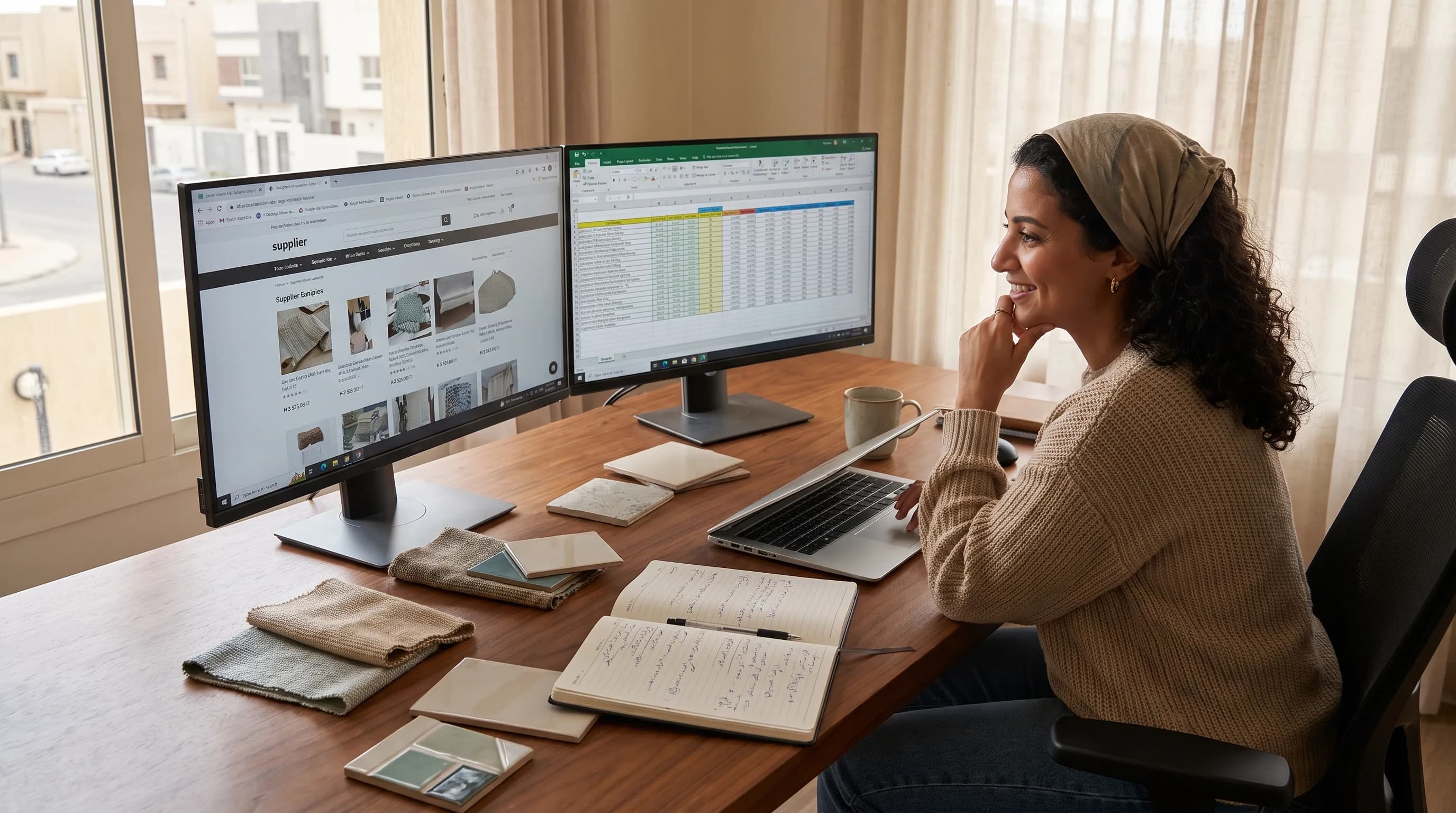
Supplier research is one of those tasks that expands to fill however much time you give it. Without a specification and a process, it turns into forty tabs, a dozen half-finished WhatsApp threads, and no real answer. With both, it becomes a short, comparable list you can actually decide from.
Define what you actually need
Before searching for anything, write down what the product is, roughly how many units you would need for a first order, and your rough target cost per unit. Searching without these numbers means every supplier looks equally plausible, because you have no filter to rule anyone out.
Product specification
A specification is the exact description you would send to ten different suppliers and expect ten comparable quotes back: material, size, color options, packaging, any required markings. The more specific it is, the more the quotes you get back will actually mean something next to each other.
Where to search
B2B marketplaces (like Alibaba or regional equivalents) are the obvious starting point, but trade directories, industry associations and even other sellers of a similar product (who will sometimes share who they source from) are worth checking too. Do not stop at the first page of results: the most responsive, well-matched supplier is rarely the one with the flashiest storefront.
Manufacturer versus distributor
A manufacturer makes the product and usually offers better pricing at volume but higher minimums. A distributor or trading company holds stock from several manufacturers, often with lower minimums and faster shipping, at a higher per-unit price. Neither is automatically better: it depends on your order size and how fast you need product.
Understanding MOQ
MOQ (minimum order quantity) is the smallest amount a supplier will produce or sell in one order. It is often negotiable, especially for a first order or if you are flexible on color or packaging. Always ask directly rather than assuming the number on a listing is fixed.
Samples
Order a sample before committing to a full order, even if it costs more per unit and takes a week or two. A sample tells you things a listing photo cannot: real material weight, real color, real finish. Treat sample cost as a small insurance premium against a much larger mistake.
Practical example
Someone planning a small skincare line writes a one-page specification: jar size, material, cap color, labeling requirements, and a target order of 500 units. She sends it to twelve suppliers found across two marketplaces and one industry directory. Seven reply with usable quotes. She builds a comparison sheet, orders samples from the four closest on price and lead time, and ends up with a shortlist of two she trusts enough to place a first order with.
Common mistakes
Action checklist
- Write a one-page product specification.
- Decide your target order quantity and rough target price.
- Search at least two different sources, not just one marketplace.
- Send the same questions to every candidate.
- Build a single comparison sheet with price, MOQ, sample cost and lead time.
- Order samples from your top candidates before committing to a full order.
- Shortlist three to five suppliers before going deeper with anyone.
FAQ
Is MOQ always fixed?
Often not. Many suppliers will lower it for a first order, especially if you are flexible on color, packaging or timing. It is always worth asking directly.
How many suppliers should I contact at once?
Somewhere around eight to twelve is usually enough to get several usable, comparable quotes back without the process becoming unmanageable.
Do I need to visit a supplier in person before ordering?
Not for a first small order. A sample, clear written communication and a comparison against other suppliers usually give you enough to make a reasonable first decision.